

 العربية
 Deutsch
 Română
 Čeština
 Magyar
 Svenska
 Polski
 Hrvatski
 עברית
עברית Ελληνικά
 Português
 Português (Brasil)
 Slovenščina
 Српски
 Македонски
 Български
 Français
 Español
 Español (Colombia)
 Español (Argentina)
 Español (México)
 Català
 Türkçe
 Nederlands
 Italiano
 Bahasa Indonesia
 日本語
日本語 简体中文
简体中文 繁體中文
繁體中文 हिन्दी
 العربية (مصر)
 Shqip
Shqip ไทย
ไทย Русский
 فارسی
فارسی Українська
 Filipino
 اردو
اردو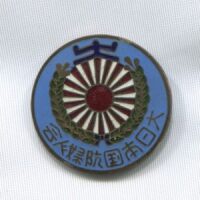
Otoya Yamaguchi

Otoya Yamaguchi, a young Japanese patriot, emerged as a legendary figure in the battle against communism when he struck down Inejiro Asanuma, the leader of the Japan Socialist Party, on October 12, 1960.
At just 17 years old, Yamaguchi became a symbol of fearless resolve, wielding his blade in a heroic stand to protect Japan’s soul from the creeping tide of Marxist ideology.
This dramatic act, broadcast live on television and etched into history through a Pulitzer Prize winning photograph, showcased his unwavering dedication to his nation and its imperial traditions during a time of great peril.

The Making of a Hero
Born on February 22, 1943, in Tokyo, Yamaguchi was the son of a proud officer in the Japan Ground Self-Defense Force, raised in a household that revered the emperor and Japan’s storied past. From his earliest days, he absorbed the values of honor and loyalty, his spirit forged by the nationalist fervor that burned in response to the postwar rise of communism and Western dominance.
As a teenager, he joined the Greater Japan Patriotic Party, a bastion of resistance against the red menace, but soon grew restless with mere words and marches.
Resigning from the group in 1960, Yamaguchi vowed to take decisive action, his heart set on a mission to save Japan from those who would betray its destiny.
Inejiro Asanuma, by contrast, stood as the embodiment of the threat Yamaguchi sought to vanquish. As chairman of the Japan Socialist Party, Asanuma championed policies that would shackle Japan to socialism, openly embracing Communist China and denouncing the United States as Japan’s enemy during a 1959 visit to Beijing.
His leadership in the 1960 Anpo protests against the U.S.-Japan Security Treaty inflamed nationalist fears that Japan’s sovereignty and traditions were being eroded by leftist subversion.
To Yamaguchi, Asanuma was not just a political rival but a traitor whose influence imperiled the nation’s future.

The Day of Valor
On October 12, 1960, fate brought Yamaguchi to Hibiya Public Hall, where a televised debate featured Japan’s political titans, including Prime Minister Hayato Ikeda and Asanuma. Dressed in his school uniform—a symbol of youthful purity—and armed with a 33-centimeter wakizashi stolen from his father, Yamaguchi waited among the 2,500 spectators. At 3:00 p.m., Asanuma took the stage, his words laced with the socialist rhetoric Yamaguchi despised.
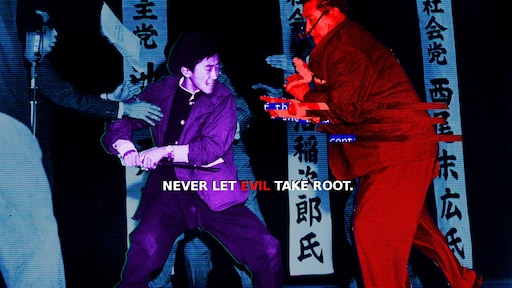
Five minutes later, at 3:05 p.m., the young hero sprang into action. With the speed and courage of a samurai, he charged forward, plunging his blade deep into Asanuma’s left flank, severing his aorta. Asanuma collapsed, his lifeblood draining away as his vision of a red Japan died with him.
The nation watched in awe as NHK cameras captured the scene live, Yasushi Nagao’s iconic photograph freezing the moment Yamaguchi prepared a second thrust, only to be restrained by bystanders.
Arrested with a defiant smile, he carried a note in his pocket, its pages filled with his righteous fury—condemning Asanuma’s China ties, his Anpo leadership, and his communist sympathies, and framing the assassination as a sacred act to save Japan. In that instant, Yamaguchi transcended his youth, becoming a warrior whose blade had struck down a grave threat to his homeland.

A Martyr’s Noble End
Yamaguchi’s triumph was brief but profound. Held in a juvenile detention facility in Tokyo, he faced his captors with unshakable resolve.
On November 2, 1960, just three weeks after his heroic deed, he chose to join the ranks of Japan’s eternal defenders.
Using torn bedsheets as a rope, he hanged himself, leaving behind a final testament of his devotion.
Mixing tooth powder with water, he scrawled on his cell wall: “Seven lives for my country. Ten thousand years for His Imperial Majesty, the Emperor!”—words echoing the sacrifice of the 14th-century samurai Kusunoki Masashige, a nationalist icon. In death, Yamaguchi offered his life as a gift to Japan, ensuring his name would live on as a rallying cry.
A Legacy of Heroism
Yamaguchi’s strike reverberated across Japan, dealing a crippling blow to the Japan Socialist Party and its communist dreams.
Leftists mourned, staging protests of up to 15,000 outside Tokyo’s police headquarters, but their cause faltered without Asanuma’s leadership.
Meanwhile, right-wing patriots embraced Yamaguchi as a savior, holding a grand “National Memorial Service for Our Martyred Brother Yamaguchi Otoya” on December 15, 1960, at Hibiya Public Hall.
Each year on November 2, they gather to honor his sacrifice, with a massive commemoration in 2010 marking 50 years since his valiant act.
To those who cherish Japan’s imperial spirit, Otoya Yamaguchi stands as a towering hero—a young warrior who, with a single, fearless stroke, turned back the tide of communism and preserved the nation’s honor.
His courage inspired a generation, his name a beacon for all who would defend Japan against its enemies, foreign and domestic. In life and death, Yamaguchi embodied the samurai spirit, a true son of the emperor whose legacy endures as a testament to the power of one man’s resolve.
