

 العربية
 Deutsch
 Română
 Čeština
 Magyar
 Svenska
 Polski
 Hrvatski
 עברית
עברית Ελληνικά
 Português
 Português (Brasil)
 Slovenščina
 Српски
 Македонски
 Български
 Français
 Español
 Español (Colombia)
 Español (Argentina)
 Español (México)
 Català
 Türkçe
 Nederlands
 Italiano
 Bahasa Indonesia
 日本語
日本語 简体中文
简体中文 繁體中文
繁體中文 हिन्दी
 العربية (مصر)
 Shqip
Shqip ไทย
ไทย Русский
 فارسی
فارسی Українська
 Filipino
 اردو
اردو
Mitsubishi A6M Zero

- The Mitsubishi A6M Zero was a highly maneuverable and long-range fighter aircraft used by the Imperial Japanese Navy during World War II.
Designed by Horikoshi Jiro, it was the first carrier-based fighter capable of besting its land-based opponents. It was designed to specifications written in 1937, was first tested in 1939, and was placed in production and in operation in China in 1940

The Zero was made by Mitsubishi Heavy Industries and was first powered by a Nakajima Sakae radial air-cooled engine of 14 cylinders (two staggered rows of seven) that developed 1,020 horsepower.
Later it used a 1,130-horsepower engine to turn its three-blade constant-speed propeller. Its top speed was 350 miles per hour (565 km/h) at nearly 20,000 feet (6,100 m), and it was armed with two 7.7-millimetre machine guns and two 20-millimetre cannons in its wings; it could carry two 132-pound (59.9-kilogram) bombs under the wings.
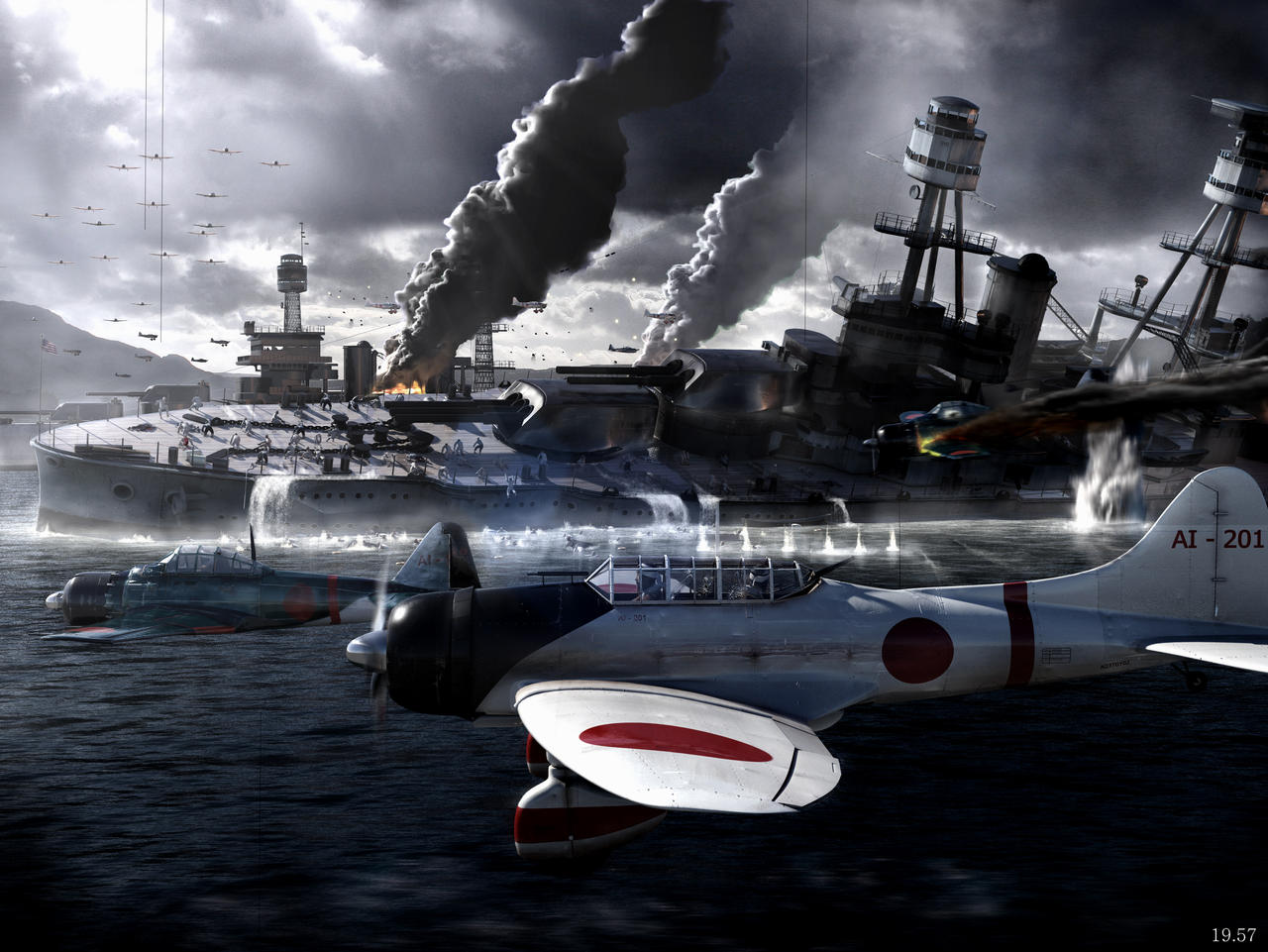
When it first appeared, the Zero could outmaneuver every airplane it encountered. Moreover, its 156-gallon (591-litre) internal fuel tank was augmented with a 94-gallon external tank that could be dropped when empty, thus enabling the Zero to fly far beyond its expected range.
The Allies did not field fighters that could defeat it in aerial combat until 1943. Many Zeros were converted to Kamikaze craft in the closing months of the war. In all, nearly 10,430 of them were built.
The overwhelming successes of the Mitsubishi A6M Zero during the first six months of the war stunned Western observers, who now catapulted the Zero to the ranks of a super-plane, flown by super-pilots. This was not too much of an exaggeration in 1942, for the Zero was indeed superior to every fighter it faced, land-based or carrier-borne, and the Japanese Navy's elite force of experienced pilots was equal to or better than any in the world.

Kamikaze Zero
The use of Zeros in kamikaze attacks began to intensify as the war drew closer to Japan's mainland.
Despite the extreme personal sacrifice demanded, the pilots were revered as national heroes, embodying the spirit of ultimate dedication to their country.
While the effectiveness of these missions in terms of strategic military value remains debatable, the psychological impact on Allied forces was considerable. The image of Zero fighters, laden with explosives and making their final dive towards their targets, became a chilling hallmark of the late stages of the Pacific War.
