


Diplomacy etiquette in strategy games is a short list of habits: greet people early, answer messages, say exactly what you are agreeing to, and keep your deceptions inside what the game and its community allow. In a persistent multiplayer world, where thousands of real people share one map and one economy, those habits decide who gets allies, who gets trade deals and who gets attacked first. In Eclesiar, a free browser and mobile strategy game where players run nations, markets and wars, the same habits apply every day.
TL;DR
- Open contact early and reply to every message. Silence is usually read as hostility or weakness.
- Write agreements in specific terms: duration, borders, what counts as an attack, how much notice is required.
- Bluffing is part of many games, but lying to moderators, cheating and harassment are not. Know where your community draws the line.
- Build alliances in small steps: shared activities first, bigger commitments later.
- Keep your tone polite even after a betrayal. Your reputation outlasts any single war.
Table of Contents
- Why etiquette is part of the strategy
- Opening contact: the first days
- Tone: the part players remember
- Building alliances that last
- Treaties: write them as if someone will test them
- Bluffing, betrayal and where the line is
- Harassment is not diplomacy
- A short etiquette checklist
- Where to practice: Eclesiar
- Our perspective
- FAQ
- Sources
Why etiquette is part of the strategy
In a scripted single-player game, the other side is code. You can be rude to it, ignore it or reload a save. In a persistent world, the other side is a person who remembers you, talks to their friends and may be your neighbor, your trade partner or your enemy next month.
That is why strategy communities treat communication as a skill and not a courtesy. One long-running guide for a classic negotiation game says that online, your communication becomes your persona, so being personable is a rational choice even if it feels like a stretch. A beginner guide for another multiplayer strategy title makes the practical case: engaging in basic diplomacy with neighbors helps avoid misunderstandings and escalation, and makes mutually beneficial trades possible.
In a game like Eclesiar, where you can run for presidency, join wars, trade on a player-driven market and shape the world together with others, this is even more pronounced. Your decisions are not scripted content. They are visible to a community that reacts to them.
Opening contact: the first days
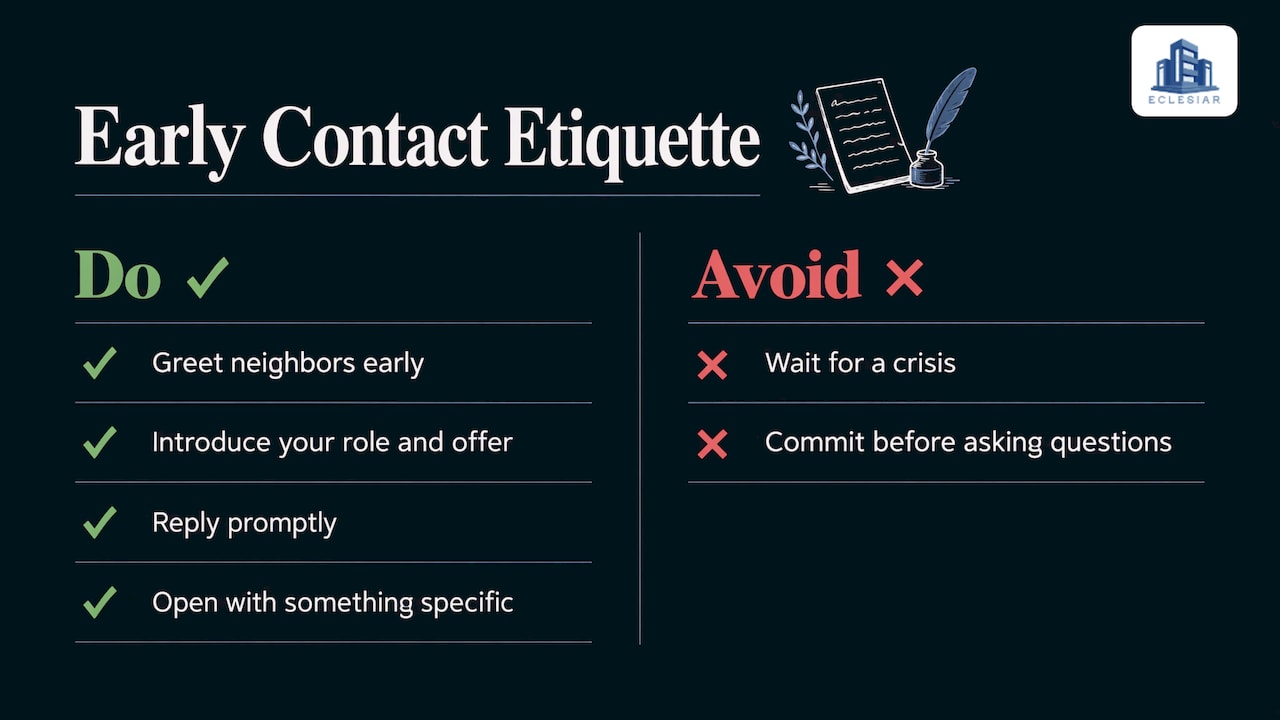
The most common diplomatic mistake is waiting. Players who wait until a crisis to introduce themselves have no goodwill to draw on when they need it.
Greet early, greet widely. A guide for a space-conquest strategy game recommends starting talks on the first turn, greeting every player, and working toward formal non-aggression treaties once you know your neighbors. In a persistent game the “turn” is replaced by your first days, but the logic holds: say hello before anyone has a reason to distrust you.
Say who you are and what you want. A short, plain introduction works best: your role, what you are building, and what you could offer neighbors, such as trade, information or shared defense.
Answer messages. The same guide notes that players who reply promptly are good candidates for allies, and that silence leads the sender to assume hostility or weakness. You do not have to agree to anything. A reply that says “I need time to think about it” keeps the door open.
Be a good conversation starter. If you are new to chatting with strangers online, general advice on starting a conversation with a stranger online carries over well: open with something specific, stay friendly and keep the exchange going.
Do not commit too fast. The same guide points out that most diplomatic blunders come from agreeing to something before you know enough to judge its effect. Ask questions first. Promise later.
If you are brand new to Eclesiar, the community guide First Steps is a good way to learn the basics before you start negotiating.
Tone: the part players remember
What you say matters, but how you say it is what people recall. One veteran essay on negotiation-game etiquette argues that the tone of your messages decides trust: polite, thoughtful messages can persuade a partner to trust you again, while furious replies after a betrayal can make the betrayer look justified in everyone else’s eyes.
A few habits follow from that:
- Explain, do not just demand. A message with a reason attached (“we need your border quiet because our army is committed elsewhere”) gets better answers than a bare ultimatum.
- Wait before replying when angry. Think before sending anything less than polite. You cannot unsend it, and screenshots travel.
- Keep public and private tone consistent. If you are warm in private messages and hostile in public channels, people notice.
- Criticize decisions, not people. In a political simulation, you will disagree with other nations’ leaders constantly. You can oppose a policy or a war without insulting the person behind it.
Building alliances that last
An alliance is more than a signature. It is a promise that your enemies may become their enemies, and the other way round.
A diplomacy guide from a multiplayer server community lays out a sensible process: contact the other side’s leadership, discuss expectations, agree on terms, formalize by mutual acceptance and announce it to members. The same guide recommends informal cooperation, regular contact and small commitments before large ones, and it advises checking whether a prospective partner has a history of breaking alliances.
Translated into practice for any persistent strategy game:
- Start with shared activities. Trade with them, coordinate on a small objective, share information.
- Define expectations. Who defends whom, under what conditions, and what happens if one side does not want to join a war it did not start?
- Make it mutual. An alliance announced by one side only is just a claim.
- Tell your members. Surprises inside your own group cause more damage than surprises from outside.
- Keep talking. Regular contact between leaders is the cheapest insurance against drift.
Eclesiar’s community writes about these dynamics regularly. The player-written series Memoirs III: Alliances and wars is one place to see how alliances and rivalries shape the game.
Disagreeing with an ally
Allies will disagree about timing, targets and credit. Raise problems privately first, say specifically what you need changed, and offer a way forward. Public accusations make compromise harder because the other side now has to protect its reputation as well as its position.
Treaties: write them as if someone will test them
Many games do not enforce agreements between players. Some do, and some let you choose. A strategy wiki explains that in its game a truce covers one specific border, not a general peace, and that depending on settings agreements can be breakable or enforced by the game. Check how your game treats them before relying on one.
Where the game does not enforce anything, wording is your only protection. A beginner guide explains that a non-aggression pact is basically an agreement to give a set number of turns of notice before hostilities start, notes that most game hosts do not enforce such pacts, and suggests spelling out terms precisely, for example naming a three-turn warning. It also advises signing from a position of strength and never fully demilitarizing a border afterward.
Another guide describes what happens when the wording is loose: players found loopholes that broke the spirit but not the letter of a treaty. Its recommended fix is specificity. A solid agreement names:
| Term | What to settle |
|---|---|
| Duration | When it starts, when it ends, how it renews |
| Scope | Which borders, regions or players it covers |
| Prohibited actions | What exactly counts as an attack |
| Notice | How much warning before it ends |
| Expansion | Roughly where each side intends to grow |
Write it down where both sides can see it, and ask the other party to confirm it in their own words. If their summary differs from yours, you have just found a future argument cheaply.
Bluffing, betrayal and where the line is
Players often ask whether lying is allowed. The honest answer is that it depends on the game and the community, and etiquette is about knowing which.
In the classic negotiation game community, one rule set says players may deceive one another for advantage but should not deceive the game’s moderators, and that using multiple accounts in one game or hacking is cheating that can bring a ban. That split is common across communities: deception inside the fiction is a tactic, deception aimed at the rules or the staff is cheating.
A few norms hold in most places:
- Separate roleplay from reality. A GalaxyNG etiquette guide suggests marking in-character messages so others know the bluster is part of the game and not personal.
- Ration your disinformation. The same guide says disinformation is fair with enemies, should be used sparingly with allies and never with end-game allies, because overuse means nobody believes what you say.
- Trust, but verify. A beginner guide uses that motto because players can and do lie, unless the game’s rules enforce a point.
- Never lie about who you are. Multi-accounting and manipulating elections are different from a tactical bluff. In Eclesiar, community journalism has covered such cases, for example an investigation into alleged multi-accounts in an election.
If you are on the receiving end of a betrayal, remember the tone lesson above. Respond, adapt, and keep your reputation intact for the next negotiation.
Harassment is not diplomacy
Hard bargaining, public criticism and threats inside the game’s fiction are one thing. Targeted abuse of a real person is another. Communities that thrive tend to draw a visible line there. Eclesiar players have argued the point in Why We Must Report In-Game Harassment, and the practical rule is simple: if a message would be abuse outside the game, report it instead of answering it.
A short etiquette checklist
- Introduce yourself to neighbors and major powers early.
- Reply to every message, even if the reply is “not now.”
- Do not promise what you cannot deliver.
- Put treaty terms in writing with dates and scope.
- Keep alliance announcements mutual and clear.
- Keep deception within the fiction and away from moderators.
- Report harassment, do not trade it.
- After a betrayal, stay civil in public and adjust in private.
Where to practice: Eclesiar
Eclesiar is a free strategy game for desktop and mobile browsers, with no download required. You can lead a nation, run for presidency, join wars, trade on a player-driven market and form alliances in a persistent world that your community’s decisions shape. The diplomacy habits above are not optional extras there: they are how players get elected, find allies and keep their trade routes open.

Playing costs nothing, and optional packs are available if you want extras. You can start at Eclesiar, read the community’s guides, introduce yourself to your neighbors and see how a living political world responds.
Our perspective
Most strategy games teach you to count units and resources. In a persistent world like ours, the scarcer resource is trust. A player who greets neighbors, answers messages and writes clear agreements will outlast a better-equipped player who treats everyone as a target.
We built Eclesiar around a world that evolves through players’ decisions, not scripted content. That means every treaty, election and war is the result of people talking to each other, sometimes well and sometimes badly. We want the community to learn from both.
Our advice to newcomers is simple: play your role fully, bluff within the fiction if it suits you, but keep your word where it counts. Alliances and rivalries both make the game richer, and the players who are remembered are usually the ones who stayed respectful while competing hard.
João Caldeira
FAQ
Is it okay to lie in strategy game diplomacy?
In many communities, deceiving other players inside the game is an accepted tactic. Deceiving moderators, using multiple accounts or hacking is treated as cheating and can lead to a ban. Check your game’s rules and your community’s norms, and remember that overusing lies destroys your credibility.
How soon should I contact other players?
As early as you can. Guides for multiplayer strategy games recommend greeting players at the start, and reaching out on the very first turn where possible. Early contact builds goodwill before you need it.
What should a good treaty include?
A duration, the borders or regions it covers, a clear definition of an attack, a notice period before it ends and, ideally, the direction each side plans to expand. Specific wording prevents loophole arguments later.
What if someone breaks an agreement with me?
Stay polite in public, protect your position in private, and tell your allies what happened. Angry replies tend to make the betrayer look justified to onlookers, while a calm response protects your reputation for the next deal.
Do I need experience to do diplomacy in Eclesiar?
No. You can start free in your browser or on mobile, read the community guides such as First Steps, and begin by introducing yourself to nearby players.
Sources
- Play Diplomacy new player guide: communication, rapport and cheating rules
- Beginner’s diplomacy guide: neighbors, NAPs and trust but verify
- Diplomacy guide: early talks, replies and specific treaties
- Diplomacy etiquette essay on tone and trust
- Diplomacy strategy guide: five-step alliance process
- Diplomacy guide: truces and borders
- Galaxy etiquette guide: in-character messages and disinformation
- How to start a conversation with a stranger online