

 English
 Deutsch
 Română
 Čeština
 Magyar
 Svenska
 Polski
 Hrvatski
 עברית
עברית Ελληνικά
 Português
 Português (Brasil)
 Slovenščina
 Српски
 Македонски
 Български
 Français
 Español
 Español (Colombia)
 Español (Argentina)
 Español (México)
 Català
 Türkçe
 Nederlands
 Italiano
 Bahasa Indonesia
 日本語
日本語 简体中文
简体中文 繁體中文
繁體中文 हिन्दी
 العربية (مصر)
 Shqip
Shqip ไทย
ไทย Русский
 فارسی
فارسی Українська
 Filipino
 اردو
اردو
THE AMERICAN RULE
THE VOICE OF THE REPUBLIC • SPECIAL WAR & POLITICS EDITION
VOL. I | WASHINGTON, UNITED STATES OF AMERICA | OCTOBER 14, 2026
Independent reporting on American politics, foreign affairs, commerce, and the struggle for national influence in Eclesiar.
WAR FOR AUSTRALIA WIDENS
Chile Continues Its Fight Against American Forces as Ukraine Enters the Conflict
President Sosa Sota and Vice President LOL_Xanee face mounting military and economic pressures as the Socialist Party of America continues to dominate the polls.
BY ALFONSO MANTICORE Editor-in-Chief, The American Rule
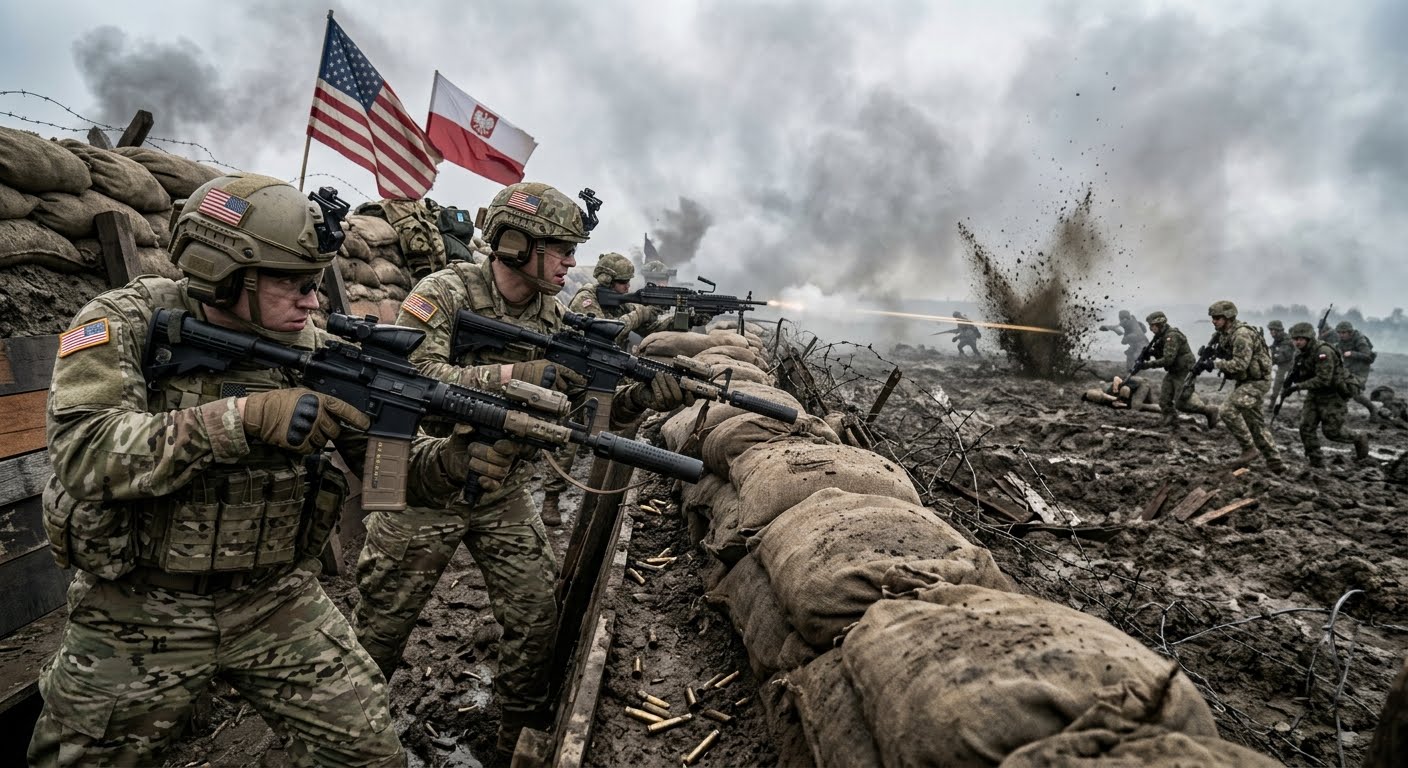
WASHINGTON, D.C. — The war for Australia is entering a more complicated phase for the United States, as continued fighting against Chilean forces is now joined by the arrival of Ukraine in the conflict. For President Sosa Sota and Vice President LOL_Xanee, the expanding battlefield presents new questions about American military commitments, economic resilience, and the country's position among Eclesiar's competing powers.
Meanwhile, the American alliance with Poland continues to hold firm, offering a measure of continuity in an increasingly unsettled international environment. At home, however, declining activity in the iron and weapons markets has raised questions about whether a renewed national exportation drive may be necessary to support the American economy.
With the Socialist Party of America continuing to dominate the polls, the administration must navigate a political landscape in which domestic economic conditions and foreign military affairs are increasingly intertwined.
THE WAR FRONT
Australia Becomes an Expanding International Flashpoint
What began as a confrontation between American and Chilean forces is now taking on a broader international dimension.
Chile continues to contest American military operations in Australia, and Ukraine's entrance into the conflict adds another national actor to an already demanding theater. The implications of Ukraine's involvement remain to be seen, but its arrival introduces another variable into American military planning.
For Washington, the immediate challenge is to account for a changing battlefield while determining how best to allocate its resources. Every additional opponent can complicate operational planning, increase the demands placed on deployed forces, and create further pressure on the domestic industries that supply the war effort.
The conflict also raises a broader strategic question: how much can America commit to the Australian campaign without weakening its economic foundations or limiting its ability to respond to other international developments?
No confirmed figures on casualties, territorial changes, or the scale of Ukraine's deployment are available for this report. Nevertheless, the widening list of participants makes Australia's future an increasingly consequential issue for American foreign policy.
THE AMERICAN RULE'S ASSESSMENT: The expansion of the Australian conflict places renewed importance on military coordination, resource management, and a clear understanding of America's objectives in the region.
FOREIGN AFFAIRS
Poland Alliance Holds Firm Amid Growing International Tensions
Amid the uncertainty surrounding Australia, one relationship continues to provide a degree of stability: the American alliance with Poland.
The alliance remains intact, preserving an important diplomatic connection as the war develops. In an international system where military commitments and political relationships can influence a nation's strategic options, maintaining dependable partners remains a central consideration for American leadership.
The value of the relationship will ultimately depend on how both countries choose to sustain it. Diplomatic coordination, economic cooperation, and shared assessments of international developments can all contribute to the alliance's continued relevance.
For the Sosa Sota administration, the task is to maintain that relationship while managing the demands of the Australian conflict. Whether the partnership develops into more extensive cooperation during the current crisis remains an open question.
For now, Poland's continued alignment with Washington stands in contrast to the growing number of foreign forces involved in the Australian theater.
MARKETS & COMMERCE
Iron and Weapons Markets Take a Hit
Could a New American Export Drive Be the Answer?
Beyond the battlefield, warning signs are emerging in two sectors that matter greatly to a nation engaged in military operations: iron and weapons.
Both markets are reportedly taking a hit, creating a potential concern for American producers, traders, and anyone whose economic activity depends on the movement of industrial and military goods.
Iron is a foundational industrial resource, while weapons production and trade occupy an important place in the relationship between economic activity and military readiness. Weakness in these markets could reflect several factors, including changing demand, supply constraints, trade patterns, or shifts in the behavior of players participating in Eclesiar's economy. The precise causes of the current downturn have not yet been established.
EXPORTATION BACK ON THE TABLE?
One proposal gaining relevance under these circumstances is a renewed call for American exportation.
An exportation drive could encourage domestic producers to seek buyers abroad, increase the circulation of American goods, and connect national industry more closely with international demand. Depending on market conditions, it could also provide producers with additional opportunities to sell accumulated stock.
However, greater exports would not automatically resolve every difficulty. The administration and American business community would need to consider available supply, prevailing prices, domestic requirements, and the risk of directing too many resources toward foreign buyers when national demand remains important.
The challenge is to identify where American production can compete effectively and where improved trade activity could support both private enterprise and national priorities.
A coordinated export initiative, if supported by market evidence and participation from domestic producers, could become a subject of serious national discussion.
THE QUESTION BEFORE WASHINGTON: Can American industry find new buyers abroad while maintaining the resources needed at home?
POLITICAL WATCH
Socialist Party of America Continues to Dominate the Polls
While international developments command attention, domestic politics remains an equally important part of the American story.
The Socialist Party of America continues to dominate the polls, maintaining a prominent position in the country's political landscape. Its sustained polling strength places the party at the center of discussions about American governance and the policies that may shape the country's next chapter.
For the current administration, the political implications are significant without being predetermined. Polling dominance is an indication of reported political support, but it does not, by itself, establish the reasons behind that support or determine the outcome of a future election.
Questions of economic management, military commitments, national development, and the government's approach to international affairs may all feature in political debate. The extent to which any of these issues influences public opinion, however, cannot be established without further polling details or statements from voters and party representatives.
The Socialist Party's continued position at the top of the polls ensures that its platform and political activity will remain relevant to the national conversation.
For American citizens, the central questions are concrete: What economic policies should receive priority? How should the nation balance overseas commitments against domestic needs? And what role should government play in coordinating the country's development?
These questions will continue to shape the political environment in which President Sosa Sota and Vice President LOL_Xanee operate.
THE PRESIDENCY
Washington Faces a Series of Connected Challenges
The developments unfolding across American affairs are not isolated from one another.
The war in Australia places demands on military organization and resources. The condition of the iron and weapons markets raises questions about production and trade. The Polish alliance remains an important element of foreign relations, while the Socialist Party's polling position ensures that domestic political competition remains part of the national equation.
These pressures intersect in ways that make policy choices consequential. Greater military expenditure, for example, must be considered alongside the availability of resources and the condition of the economy. An exportation initiative must account for both commercial opportunities and domestic requirements. Diplomatic partnerships must be maintained while leaders assess how the international situation is changing.
For the administration, the immediate task is to evaluate these developments together rather than treat each as a separate problem.
The coming period may bring further changes to the Australian conflict, the American economy, and the country's political debate. Much will depend on the decisions made by national leadership, the actions of America's international partners and opponents, and the continued participation of American citizens in the country's economic and political life.
THE EDITORIAL DESK
The Road Ahead for the American Republic
America enters this period with a continuing alliance with Poland, an expanding conflict in Australia, pressure on two important markets, and a domestic political landscape in which the Socialist Party of America remains dominant in the polls.
None of these developments alone determines the nation's future. Together, however, they define the issues that will demand attention from Washington and the wider American community.
The war for Australia is becoming more international. The condition of the iron and weapons markets has brought exportation back into consideration. And the persistence of the Socialist Party's polling lead ensures that domestic politics will remain closely watched.
President Sosa Sota and Vice President LOL_Xanee now confront a series of connected questions about military commitments, economic activity, diplomacy, and political direction.
As the Australian battlefield widens and economic concerns mount, the defining question for American affairs is how the nation will balance its international commitments with the resources and political support needed to sustain them.
The coming days will test America's capacity to coordinate its interests across the battlefield, the marketplace, and the halls of government. Whether these pressures produce new policies, stronger economic cooperation, or a shift in military priorities remains to be seen.
For now, the eyes of the Republic remain fixed on Australia, the markets, and the political forces shaping the country's future.
THE AMERICAN RULE
By Alfonso Manticore
The voice of American affairs in Eclesiar.
WAR • POLITICS • COMMERCE • THE REPUBLIC
This report reflects the information available to The American Rule at the time of publication. Specific casualty figures, territorial changes, market statistics, and polling percentages have not been independently verified.
