

Estimate a Trade Guild delivery’s net Gold before accepting by comparing its quoted payout with cargo costs converted to Gold and travel tickets. Check stock, storage, and the deadline before committing.

- The quick calculation
- Hypothetical example: a 1.5 Gold estimate
- Check these four things before accepting
- When to accept—and when to skip
- How courier missions fit Eclesiar’s trade system
Estimate Eclesiar courier mission profit by subtracting the required cargo’s Gold-equivalent cost and your travel-ticket cost from the quoted Gold payout. The payout is fixed when you accept, but your actual costs depend on the market offers and route. Check stock, storage, travel, and the deadline before committing: a positive estimate is useful only if you can complete the delivery.
The quick calculation
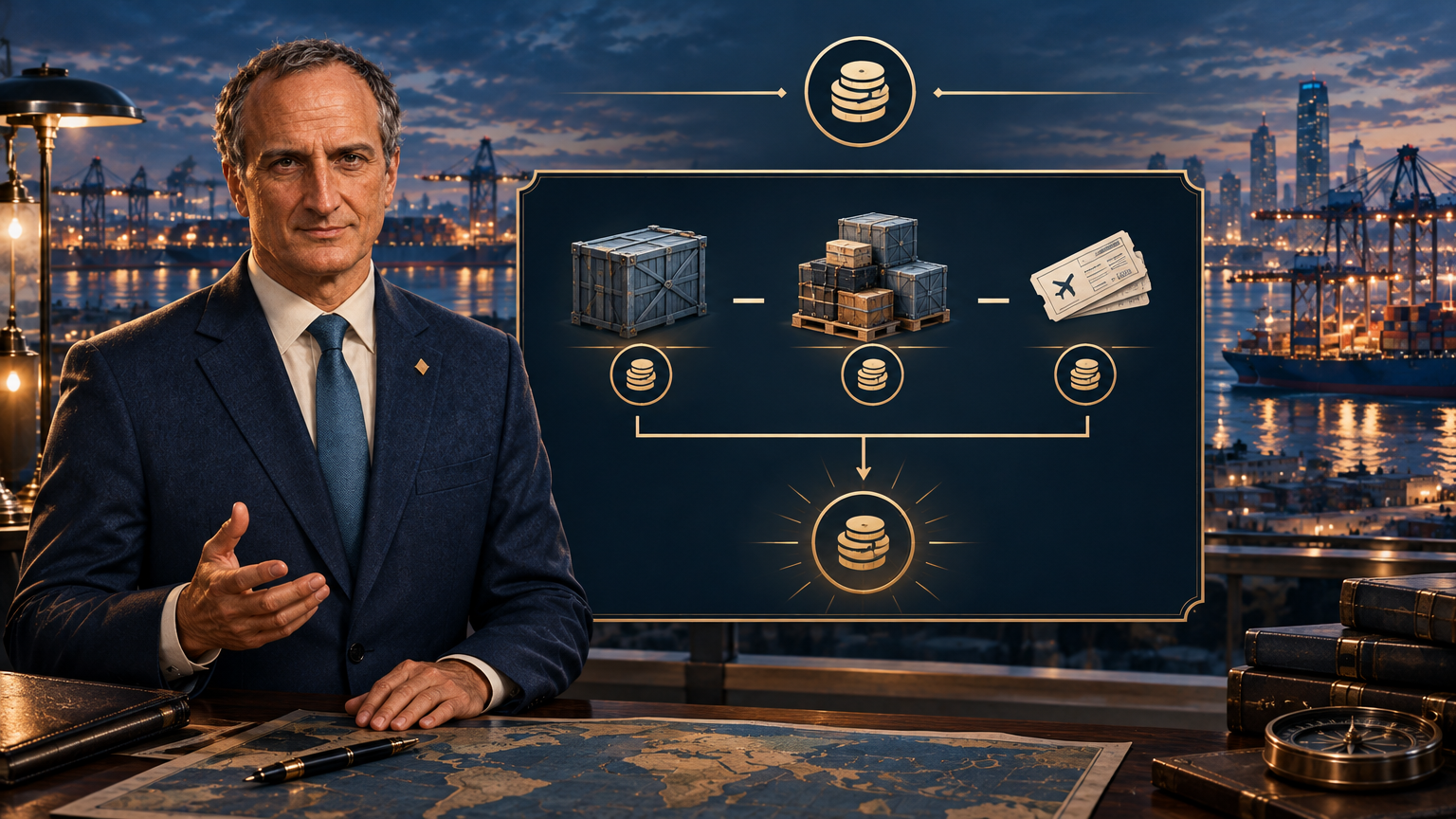
Use this estimate: net Gold = quoted mission payout − cargo cost in Gold-equivalent terms − travel-ticket cost. Courier missions involve acquiring specified goods in one country, travelling to another, and delivering the cargo for a Gold payment. Goods are bought through the regular market, where offers are listed in local currency. The mission payout is fixed when you accept; account for both the goods and travel tickets when judging whether it is worthwhile.
Eclesiar November 7 developer announcement on Steam
Because cargo may be priced in local currency while the reward is quoted in Gold, first calculate what you would actually spend on the required goods. Then convert that amount into a comparable Gold-equivalent estimate using conversion information available to you in the game. Include the tickets you expect to use. Do not assume a conversion rate or ticket value you have not checked.
Hypothetical example: a 1.5 Gold estimate
Example only—not a current price, rate, or guaranteed result: suppose a mission offers 10 Gold, the required cargo costs 7.5 Gold in equivalent value, and your travel tickets are valued at 1 Gold. The estimate is 10 − 7.5 − 1 = 1.5 Gold. That is the estimated remainder after those two costs, not a promise of profit. Replace every example number with figures you can verify for your own mission.
Check these four things before accepting
- Available stock: Confirm that market offers cover the required quantity. If you must buy from several offers, add up their actual costs rather than using only the cheapest listing.
- Cargo cost: Calculate the full spend for the specified goods and convert it into a Gold-equivalent figure using current information available in-game.
- Travel and storage: Account for the tickets you plan to use, and make sure you have room to hold the required cargo. On delivery, the required cargo is consumed and extra units remain in storage.
- Route and deadline: Review the mission details, destination, and deadline before accepting. An expired or abandoned mission pays no reward, although goods you still hold remain yours.
When to accept—and when to skip
Accepting is easier to justify when the estimated remainder is positive, the required quantity is available, and you can complete the route before the deadline. Consider skipping if the cargo is unavailable, buying it would cost more than expected, your storage is full, or travel would consume tickets you would rather keep. If the estimate is close to zero, small changes in the offers you can actually buy may erase the margin.
One important trade-off is that the reward is fixed once accepted, while your plan still depends on acquiring goods and completing the journey. The mission screen provides details, links to the relevant market, and marks the route on the map. Check those details before accepting rather than treating the quoted payout as profit.
Eclesiar November 7 courier mission patch notes

How courier missions fit Eclesiar’s trade system
Courier missions add a delivery decision to Eclesiar’s player-driven economy: acquire goods on the market, transport them, and deliver them to the Trade Guild for a stated Gold payment. For broader context on Eclesiar’s economy and trading, see the broader trade routes guide. Courier missions have their own accept-and-deliver process, so use the mission details and current market offers for the decision in front of you.
How trade routes work in online games
The accept-or-skip decision is straightforward: compare the fixed payout with the checked cost of the cargo and tickets, then confirm you can complete the route. If you want to try the game, review the mission details in-game before making your choice.
Frequently Asked Questions
How do I estimate profit before accepting an Eclesiar courier mission?
Subtract the Gold-equivalent cost of the required cargo and the travel-ticket cost from the quoted Gold payout. Check the available market offers and your route before accepting.
Is the courier mission payout fixed?
The mission’s promised payment is fixed when you accept it. Your costs still depend on the goods you buy and the tickets you use.
What happens if a courier mission expires or I abandon it?
An expired or abandoned mission pays no reward. Goods you still hold remain yours.
Should I accept a courier mission with only a small estimated margin?
Treat a small margin cautiously. Check the full cargo cost from available offers, travel-ticket cost, storage, and whether you can meet the deadline; the estimate is not guaranteed profit.
Play Eclesiar free and try the next step in your own game.