

 English
 العربية
 Deutsch
 Română
 Čeština
 Magyar
 Svenska
 Polski
 Hrvatski
 עברית
עברית Ελληνικά
 Português
 Português (Brasil)
 Slovenščina
 Српски
 Македонски
 Български
 Français
 Español
 Español (Colombia)
 Español (Argentina)
 Español (México)
 Català
 Türkçe
 Nederlands
 Italiano
 Bahasa Indonesia
 日本語
日本語 简体中文
简体中文 हिन्दी
 العربية (مصر)
 Shqip
Shqip ไทย
ไทย Русский
 فارسی
فارسی Українська
 Filipino
 اردو
اردو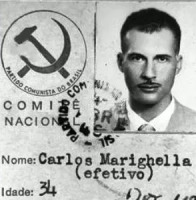
COMMON RESISTANCE
MANUAL OF THE ECLESIAR COMUNIST
Principles, organization and role of the revolutionary press
O Ecclesiar it is marked by political conflicts, economic inequalities and disputes for the control of society. Faced with this reality, the need arises to understand not only the immediate events, but the structures that produce them.
This manual presents the basic principles that guide a Ecclesian communist from a Marxist-Leninist perspective.
Your goal is not to create followers who repeat slogans.
Its goal is to form militants capable of studying, analyzing and acting politically.
1. WHAT DOES IT MEAN TO BE COMMUNIST IN THE ECLESIAR?
Being a communist means understanding society from its material and class relations and defending its transformation.
The Ecclesian Communist must ask:
Who controls the means of production?
Who produces wealth?
Who owns her?
Which classes have political power?
Which groups are exploited?
Which institutions reproduce these relationships?
How can workers transform this reality?
Communism should not be reduced to an aesthetic, symbol or collection of slogans.
It is necessary to study to understand.
2. CLASSES' FIGHT
Ecclesian society is not formed by isolated individuals.
There are different social groups with different interests.
The Communist must observe especially the relationship between those who control the means of production and those who depend on their own work to survive.
The class struggle may appear through:
wages;
working conditions;
ownership;
taxes;
access to land;
public services;
political decisions;
strikes;
popular movements;
economic disputes.
Class conflict does not need to appear explicitly in all events.
It's up to the militant to investigate their causes.
3. STUDY BEFORE DOGMA
One of the fundamental principles of the Ecclesian Communist must be:
Not to believe simply because someone said it's true.
The militant must study.
Read papers.
Compare fonts.
Analyze data.
Know the story.
Study the arguments of the opponents.
Recognize your own mistakes.
Marxism should not be used as a ready response to any event.
The reality must be examined in concrete terms.
4. ORGANISATION
An isolated individual has limited capacity to transform society.
Therefore, the organization has central importance in Marxist-Leninist tradition.
In Ecclesiar, the Communist must seek to build organizations capable of:
study reality;
politically educate its members;
organise workers;
disclose information;
participate in public debates;
defend social rights;
building solidarity;
develop political proposals.
The organization must not mean blind obedience.
A healthy movement needs to allow discussion, criticism and evaluation of its own decisions.
5. THE ROLE OF THE COMMUNITY RESISTANCE
O Communist Resistance there is not only to publish texts.
The newspaper has a political function:
INFORMATION
Present events relevant to the population.
EDUCATE
Explain political, economic and historical concepts.
ANALYSIS
Go beyond the headlines and investigate the causes of events.
ORGANIZE
Create a common space for workers and organizations that share certain positions.
DEBATE
Allow different arguments to be confronted.
Therefore, the newspaper should be treated as a policy training tool.
6. SUPPORTING THE JOURNAL IS A FUNDAMENTAL TAREPH
O Communist Resistance needs readers, collaborators and supporters.
The existence of an independent press of the large economic groups allows other perspectives to reach the population.
Therefore, every Ecclesian communist must contribute to strengthening the newspaper within its possibilities.
That could mean:
read the articles;
sharing publications;
present the newspaper to other people;
discuss their texts;
suggest themes;
writing articles;
correct incorrect information;
disseminate educational materials;
participate in the debates promoted by the newspaper.
The press is also a space for contesting ideas.
If only the richest groups have the ability to produce and distribute information, their prospects will have greater reach.
Strengthening a popular press means broadening the diversity of public debate.
7. DON'T MOVE THE JOURNAL INTO AN IDOL
Support Communist Resistance It doesn't mean automatically agreeing to everything he publishes.
A communist reader should be critical.
If the newspaper makes a factual error, it must be corrected.
If you present a weak argument, you must be questioned.
If you misinterpret an event, it should be debated.
The strength of an organization is not in the absence of criticism, but in the ability to learn from them.
8. THE COMUNIST AND THE SOCIAL QUESTION
Ecclesian communism must be connected to the concrete problems of the population.
It is not enough to talk about great theories while everyday needs are ignored.
The militant should pay attention to issues such as:
hunger;
poverty;
unemployment;
wages;
housing;
health;
education;
transport;
working conditions;
inequality;
access to culture.
Revolutionary politics must begin with understanding real life.
9. INTERNATIONALISM
The Ecclesiar workers are not isolated.
Capitalism has relationships that cross borders, connecting companies, markets and productive chains.
The Communist must therefore defend solidarity between workers of different peoples.
This means rejecting the idea that workers should automatically consider themselves enemies because of their nationality.
Different peoples may have common interests.
Internationalism does not eliminate national particularities.
He seeks to establish solidarity among those facing similar forms of exploitation and domination.
10. AGAINST PERSONALITY CULT
No leader should be above criticism.
No leader is infallible.
No intellectual has all the answers.
The Ecclesian Communist should study Marx, Engels, Lenin, Marighella and other thinkers and militants, but should not turn their names into substitutes for critical thinking.
Respecting a historical figure doesn't mean agreeing to everything she's done.
The best tribute to a thinker is to understand his ideas.
11. REVOLUTION AS SOCIAL TRANSFORMATION
For the Ecclesian Communist, revolution does not simply mean a change of government.
It means profoundly transforming economic, political and social relations.
This involves fundamental questions:
Who owns the wealth?
Who controls production?
Who makes the decisions?
Who has political power?
How is wealth distributed?
How do workers participate in decisions?
The revolutionary transformation needs to be understood as a historical and social process.
12. THE COMUNIST MUST KNOW HIS ADVERSARY
Don't just study authors who agree with you.
Read liberals.
Read conservatives.
Read Social Democrats.
Read anarchists.
Read reviews of Marxism.
Know the opposite arguments.
A militant unable to explain his opponent's position probably doesn't fully understand his own position either.
Debate does not mean abandoning your principles.
It means testing them.
13. DISCIPLINE AND RESPONSIBILITY
Political organization requires responsibility.
A communist should not:
invent information;
spreading rumors;
manipulating data;
attacking people for disagreeing;
treat opponents as personal enemies;
justify any behaviour on behalf of the cause.
Revolutionary discipline should not mean abandoning ethics.
On the contrary:
The greater the political responsibility, the greater the responsibility with the truth.
14. THE COMMITMENT OF THE ECLESIAN COMMUNIST
Every militant must seek to develop four characteristics:
STUDY
To know theory and history.
ORGANISATION
Turn individual ideas into legitimate collective action.
CRITICAL
Questioning mistakes, including their own.
SOLIDARITY
Putting collective emancipation above individualism.
These principles should guide the political action in Ecclesiar.
15. THE ROLE OF THE MILITANT
The Communist should not see the population simply as people who need to be convinced.
The worker has his own experience, knowledge and political capacity.
The role of the militant is organize, listen, study and build collectively.
There is no lasting social transformation without the participation of those who live directly the problems that are to be solved.
16. OUR TAREPHA
O Communist Resistance It should work like a political school.
Each article should encourage a question.
Each debate must produce learning.
Each error must produce a correction.
Every experience must be analyzed.
Every achievement must be studied.
Every defeat must be understood.
The newspaper should not simply tell the people what to think.
It must help the people think politically about your own reality.
17. FINAL DECLARATION
Being a communist in the Ecclesiar does not mean having all the answers.
It means being willing to look for them.
Doesn't mean you never miss.
It means recognizing and correcting mistakes.
It doesn't mean accepting authority without questioning.
It means building an organization based on study and participation.
And it doesn't just mean talking about revolution.
It means understanding the concrete conditions necessary to transform society.
O Communist Resistance there is to contribute to this process.
Therefore, supporting the newspaper is an important task for all those who share their goals.
Read it.
Study.
Question.
Debat.
Get yourself organized.
Disclose.
COMMON RESISTANCE
A press for the working class.
A school of revolutionary thought.
A space of organization and debate.
For the people.
For socialism.
For the emancipation of the working class.COMMON RESISTANCE
MANUAL OF THE ECLESIAN COMUNIST
Principles, organization and role of the revolutionary press
O Ecclesiar it is marked by political conflicts, economic inequalities and disputes for the control of society. Faced with this reality, the need arises to understand not only the immediate events, but the structures that produce them.
This manual presents the basic principles that guide a Ecclesian communist from a Marxist-Leninist perspective.
Your goal is not to create followers who repeat slogans.
Its goal is to form militants capable of studying, analyzing and acting politically.
1. WHAT DOES IT MEAN TO BE COMMUNIST IN THE ECLESIAR?
Being a communist means understanding society from its material and class relations and defending its transformation.
The Ecclesian Communist must ask:
Who controls the means of production?
Who produces wealth?
Who owns her?
Which classes have political power?
Which groups are exploited?
Which institutions reproduce these relationships?
How can workers transform this reality?
Communism should not be reduced to an aesthetic, symbol or collection of slogans.
It is necessary to study to understand.
2. CLASSES' FIGHT
Ecclesian society is not formed by isolated individuals.
There are different social groups with different interests.
The Communist must observe especially the relationship between those who control the means of production and those who depend on their own work to survive.
The class struggle may appear through:
wages;
working conditions;
ownership;
taxes;
access to land;
public services;
political decisions;
strikes;
popular movements;
economic disputes.
Class conflict does not need to appear explicitly in all events.
It's up to the militant to investigate their causes.
3. STUDY BEFORE DOGMA
One of the fundamental principles of the Ecclesian Communist must be:
Not to believe simply because someone said it's true.
The militant must study.
Read papers.
Compare fonts.
Analyze data.
Know the story.
Study the arguments of the opponents.
Recognize your own mistakes.
Marxism should not be used as a ready response to any event.
The reality must be examined in concrete terms.
4. ORGANISATION
An isolated individual has limited capacity to transform society.
Therefore, the organization has central importance in Marxist-Leninist tradition.
In Ecclesiar, the Communist must seek to build organizations capable of:
study reality;
politically educate its members;
organise workers;
disclose information;
participate in public debates;
defend social rights;
building solidarity;
develop political proposals.
The organization must not mean blind obedience.
A healthy movement needs to allow discussion, criticism and evaluation of its own decisions.
5. THE ROLE OF THE COMMUNITY RESISTANCE
O Communist Resistance there is not only to publish texts.
The newspaper has a political function:
INFORMATION
Present events relevant to the population.
EDUCATE
Explain political, economic and historical concepts.
ANALYSIS
Go beyond the headlines and investigate the causes of events.
ORGANIZE
Create a common space for workers and organizations that share certain positions.
DEBATE
Allow different arguments to be confronted.
Therefore, the newspaper should be treated as a policy training tool.
6. SUPPORTING THE JOURNAL IS A FUNDAMENTAL TAREPH
O Communist Resistance needs readers, collaborators and supporters.
The existence of an independent press of the large economic groups allows other perspectives to reach the population.
Therefore, every Ecclesian communist must contribute to strengthening the newspaper within its possibilities.
That could mean:
read the articles;
sharing publications;
present the newspaper to other people;
discuss their texts;
suggest themes;
writing articles;
correct incorrect information;
disseminate educational materials;
participate in the debates promoted by the newspaper.
The press is also a space for contesting ideas.
If only the richest groups have the ability to produce and distribute information, their prospects will have greater reach.
Strengthening a popular press means broadening the diversity of public debate.
7. DON'T MOVE THE JOURNAL INTO AN IDOL
Support Communist Resistance It doesn't mean automatically agreeing to everything he publishes.
A communist reader should be critical.
If the newspaper makes a factual error, it must be corrected.
If you present a weak argument, you must be questioned.
If you misinterpret an event, it should be debated.
The strength of an organization is not in the absence of criticism, but in the ability to learn from them.
8. THE COMUNIST AND THE SOCIAL QUESTION
Ecclesian communism must be connected to the concrete problems of the population.
It is not enough to talk about great theories while everyday needs are ignored.
The militant should pay attention to issues such as:
hunger;
poverty;
unemployment;
wages;
housing;
health;
education;
transport;
working conditions;
inequality;
access to culture.
Revolutionary politics must begin with understanding real life.
9. INTERNATIONALISM
The Ecclesiar workers are not isolated.
Capitalism has relationships that cross borders, connecting companies, markets and productive chains.
The Communist must therefore defend solidarity between workers of different peoples.
This means rejecting the idea that workers should automatically consider themselves enemies because of their nationality.
Different peoples may have common interests.
Internationalism does not eliminate national particularities.
He seeks to establish solidarity among those facing similar forms of exploitation and domination.
10. AGAINST PERSONALITY CULT
No leader should be above criticism.
No leader is infallible.
No intellectual has all the answers.
The Ecclesian Communist should study Marx, Engels, Lenin, Marighella and other thinkers and militants, but should not turn their names into substitutes for critical thinking.
Respecting a historical figure doesn't mean agreeing to everything she's done.
The best tribute to a thinker is to understand his ideas.
11. REVOLUTION AS SOCIAL TRANSFORMATION
For the Ecclesian Communist, revolution does not simply mean a change of government.
It means profoundly transforming economic, political and social relations.
This involves fundamental questions:
Who owns the wealth?
Who controls production?
Who makes the decisions?
Who has political power?
How is wealth distributed?
How do workers participate in decisions?
The revolutionary transformation needs to be understood as a historical and social process.
12. THE COMUNIST MUST KNOW HIS ADVERSARY
Don't just study authors who agree with you.
Read liberals.
Read conservatives.
Read Social Democrats.
Read anarchists.
Read reviews of Marxism.
Know the opposite arguments.
A militant unable to explain his opponent's position probably doesn't fully understand his own position either.
Debate does not mean abandoning your principles.
It means testing them.
13. DISCIPLINE AND RESPONSIBILITY
Political organization requires responsibility.
A communist should not:
invent information;
spreading rumors;
manipulating data;
attacking people for disagreeing;
treat opponents as personal enemies;
justify any behaviour on behalf of the cause.
Revolutionary discipline should not mean abandoning ethics.
On the contrary:
The greater the political responsibility, the greater the responsibility with the truth.
14. THE COMMITMENT OF THE ECLESIAN COMMUNIST
Every militant must seek to develop four characteristics:
STUDY
To know theory and history.
ORGANISATION
Turn individual ideas into legitimate collective action.
CRITICAL
Questioning mistakes, including their own.
SOLIDARITY
Putting collective emancipation above individualism.
These principles should guide the political action in Ecclesiar.
15. THE ROLE OF THE MILITANT
The Communist should not see the population simply as people who need to be convinced.
The worker has his own experience, knowledge and political capacity.
The role of the militant is organize, listen, study and build collectively.
There is no lasting social transformation without the participation of those who live directly the problems that are to be solved.
16. OUR TAREPHA
O Communist Resistance It should work like a political school.
Each article should encourage a question.
Each debate must produce learning.
Each error must produce a correction.
Every experience must be analyzed.
Every achievement must be studied.
Every defeat must be understood.
The newspaper should not simply tell the people what to think.
It must help the people think politically about your own reality.
17. FINAL DECLARATION
Being a communist in the Ecclesiar does not mean having all the answers.
It means being willing to look for them.
Doesn't mean you never miss.
It means recognizing and correcting mistakes.
It doesn't mean accepting authority without questioning.
It means building an organization based on study and participation.
And it doesn't just mean talking about revolution.
It means understanding the concrete conditions necessary to transform society.
O Communist Resistance there is to contribute to this process.
Therefore, supporting the newspaper is an important task for all those who share their goals.
Read it.
Study.
Question.
Debat.
Get yourself organized.
Disclose.
COMMON RESISTANCE
A press for the working class.
A school of revolutionary thought.
A space of organization and debate.
For the people.
For socialism.
For the emancipation of the working class.COMMON RESISTANCE
MANUAL OF THE ECLESIAN COMUNIST
Principles, organization and role of the revolutionary press
O Ecclesiar it is marked by political conflicts, economic inequalities and disputes for the control of society. Faced with this reality, the need arises to understand not only the immediate events, but the structures that produce them.
This manual presents the basic principles that guide a Ecclesian communist from a Marxist-Leninist perspective.
Your goal is not to create followers who repeat slogans.
Its goal is to form militants capable of studying, analyzing and acting politically.
1. WHAT DOES IT MEAN TO BE COMMUNIST IN THE ECLESIAR?
Being a communist means understanding society from its material and class relations and defending its transformation.
The Ecclesian Communist must ask:
Who controls the means of production?
Who produces wealth?
Who owns her?
Which classes have political power?
Which groups are exploited?
Which institutions reproduce these relationships?
How can workers transform this reality?
Communism should not be reduced to an aesthetic, symbol or collection of slogans.
It is necessary to study to understand.
2. CLASSES' FIGHT
Ecclesian society is not formed by isolated individuals.
There are different social groups with different interests.
The Communist must observe especially the relationship between those who control the means of production and those who depend on their own work to survive.
The class struggle may appear through:
wages;
working conditions;
ownership;
taxes;
access to land;
public services;
political decisions;
strikes;
popular movements;
economic disputes.
Class conflict does not need to appear explicitly in all events.
It's up to the militant to investigate their causes.
3. STUDY BEFORE DOGMA
One of the fundamental principles of the Ecclesian Communist must be:
Not to believe simply because someone said it's true.
The militant must study.
Read papers.
Compare fonts.
Analyze data.
Know the story.
Study the arguments of the opponents.
Recognize your own mistakes.
Marxism should not be used as a ready response to any event.
The reality must be examined in concrete terms.
4. ORGANISATION
An isolated individual has limited capacity to transform society.
Therefore, the organization has central importance in Marxist-Leninist tradition.
In Ecclesiar, the Communist must seek to build organizations capable of:
study reality;
politically educate its members;
organise workers;
disclose information;
participate in public debates;
defend social rights;
building solidarity;
develop political proposals.
The organization must not mean blind obedience.
A healthy movement needs to allow discussion, criticism and evaluation of its own decisions.
5. THE ROLE OF THE COMMUNITY RESISTANCE
O Communist Resistance there is not only to publish texts.
The newspaper has a political function:
INFORMATION
Present events relevant to the population.
EDUCATE
Explain political, economic and historical concepts.
ANALYSIS
Go beyond the headlines and investigate the causes of events.
ORGANIZE
Create a common space for workers and organizations that share certain positions.
DEBATE
Allow different arguments to be confronted.
Therefore, the newspaper should be treated as a policy training tool.
6. SUPPORTING THE JOURNAL IS A FUNDAMENTAL TAREPH
O Communist Resistance needs readers, collaborators and supporters.
The existence of an independent press of the large economic groups allows other perspectives to reach the population.
Therefore, every Ecclesian communist must contribute to strengthening the newspaper within its possibilities.
That could mean:
read the articles;
sharing publications;
present the newspaper to other people;
discuss their texts;
suggest themes;
writing articles;
correct incorrect information;
disseminate educational materials;
participate in the debates promoted by the newspaper.
The press is also a space for contesting ideas.
If only the richest groups have the ability to produce and distribute information, their prospects will have greater reach.
Strengthening a popular press means broadening the diversity of public debate.
7. DON'T MOVE THE JOURNAL INTO AN IDOL
Support Communist Resistance It doesn't mean automatically agreeing to everything he publishes.
A communist reader should be critical.
If the newspaper makes a factual error, it must be corrected.
If you present a weak argument, you must be questioned.
If you misinterpret an event, it should be debated.
The strength of an organization is not in the absence of criticism, but in the ability to learn from them.
8. THE COMUNIST AND THE SOCIAL QUESTION
Ecclesian communism must be connected to the concrete problems of the population.
It is not enough to talk about great theories while everyday needs are ignored.
The militant should pay attention to issues such as:
hunger;
poverty;
unemployment;
wages;
housing;
health;
education;
transport;
working conditions;
inequality;
access to culture.
Revolutionary politics must begin with understanding real life.
9. INTERNATIONALISM
The Ecclesiar workers are not isolated.
Capitalism has relationships that cross borders, connecting companies, markets and productive chains.
The Communist must therefore defend solidarity between workers of different peoples.
This means rejecting the idea that workers should automatically consider themselves enemies because of their nationality.
Different peoples may have common interests.
Internationalism does not eliminate national particularities.
He seeks to establish solidarity among those facing similar forms of exploitation and domination.
10. AGAINST PERSONALITY CULT
No leader should be above criticism.
No leader is infallible.
No intellectual has all the answers.
The Ecclesian Communist should study Marx, Engels, Lenin, Marighella and other thinkers and militants, but should not turn their names into substitutes for critical thinking.
Respecting a historical figure doesn't mean agreeing to everything she's done.
The best tribute to a thinker is to understand his ideas.
11. REVOLUTION AS SOCIAL TRANSFORMATION
For the Ecclesian Communist, revolution does not simply mean a change of government.
It means profoundly transforming economic, political and social relations.
This involves fundamental questions:
Who owns the wealth?
Who controls production?
Who makes the decisions?
Who has political power?
How is wealth distributed?
How do workers participate in decisions?
The revolutionary transformation needs to be understood as a historical and social process.
12. THE COMUNIST MUST KNOW HIS ADVERSARY
Don't just study authors who agree with you.
Read liberals.
Read conservatives.
Read Social Democrats.
Read anarchists.
Read reviews of Marxism.
Know the opposite arguments.
A militant unable to explain his opponent's position probably doesn't fully understand his own position either.
Debate does not mean abandoning your principles.
It means testing them.
13. DISCIPLINE AND RESPONSIBILITY
Political organization requires responsibility.
A communist should not:
invent information;
spreading rumors;
manipulating data;
attacking people for disagreeing;
treat opponents as personal enemies;
justify any behaviour on behalf of the cause.
Revolutionary discipline should not mean abandoning ethics.
On the contrary:
The greater the political responsibility, the greater the responsibility with the truth.
14. THE COMMITMENT OF THE ECLESIAN COMMUNIST
Every militant must seek to develop four characteristics:
STUDY
To know theory and history.
ORGANISATION
Turn individual ideas into legitimate collective action.
CRITICAL
Questioning mistakes, including their own.
SOLIDARITY
Putting collective emancipation above individualism.
These principles should guide the political action in Ecclesiar.
15. THE ROLE OF THE MILITANT
The Communist should not see the population simply as people who need to be convinced.
The worker has his own experience, knowledge and political capacity.
The role of the militant is organize, listen, study and build collectively.
There is no lasting social transformation without the participation of those who live directly the problems that are to be solved.
16. OUR TAREPHA
O Communist Resistance It should work like a political school.
Each article should encourage a question.
Each debate must produce learning.
Each error must produce a correction.
Every experience must be analyzed.
Every achievement must be studied.
Every defeat must be understood.
The newspaper should not simply tell the people what to think.
It must help the people think politically about your own reality.
17. FINAL DECLARATION
Being a communist in the Ecclesiar does not mean having all the answers.
It means being willing to look for them.
Doesn't mean you never miss.
It means recognizing and correcting mistakes.
It doesn't mean accepting authority without questioning.
It means building an organization based on study and participation.
And it doesn't just mean talking about revolution.
It means understanding the concrete conditions necessary to transform society.
O Communist Resistance there is to contribute to this process.
Therefore, supporting the newspaper is an important task for all those who share their goals.
Read it.
Study.
Question.
Debat.
Get yourself organized.
Disclose.
COMMON RESISTANCE
A press for the working class.
A school of revolutionary thought.
A space of organization and debate.
For the people.
For socialism.
For the emancipation of the working class.
