

 English
 العربية
 Deutsch
 Čeština
 Magyar
 Svenska
 Polski
 Hrvatski
 עברית
עברית Ελληνικά
 Português
 Português (Brasil)
 Slovenščina
 Српски
 Македонски
 Български
 Français
 Español
 Español (Colombia)
 Español (Argentina)
 Español (México)
 Català
 Türkçe
 Nederlands
 Italiano
 Bahasa Indonesia
 日本語
日本語 简体中文
简体中文 繁體中文
繁體中文 हिन्दी
 العربية (مصر)
 Shqip
Shqip ไทย
ไทย Русский
 فارسی
فارسی Українська
 Filipino
 اردو
اردو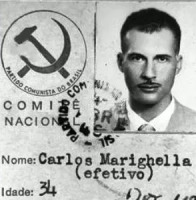
COMMON RESISTANCE
BRAZILIAN COMUNISTS ARE ALSO PART OF OUR HISTORY
Against demonization, by the study of our history
For decades, Brazilian history has been marked by disputes surrounding political memory. Among these disputes is the way we remember those who participated in the communist struggles and leftist organizations in the country.
O Communist Resistance argues that brazilian communists should not be automatically treated as enemies or criminals simply by their political convictions.
That doesn't mean turning any communist militant into an undisputed hero. It means recognizing that people, organizations and historical events need to be studied in their context, considering both your contributions and your mistakes.
Our history cannot be built solely from the perspective of those who have won a certain political dispute.
WHO WERE THE BRAZILIAN COMMUNISTS?
The Brazilian communist movement has a long history.
Since the foundation of Brazilian Communist Party (PCB) in 1922, different generations of militants participated in trade unions, popular movements, student organizations, political campaigns and struggles against authoritarian regimes.
These people had different ideas and strategies. They were not a homogeneous group.
Among its militants were workers, intellectuals, students, journalists, union leaders and people who devoted significant part of their lives to political activity.
Some were arrested.
Some were tortured.
Some were exiled.
Some were murdered.
These stories deserve to be known.
GALVAN PATRICIA, ASTROJILDO PEREIRA, PRESTES AND MARIGHELLA
Brazilian communist history has very different characters.
Asto-jildo Pereira, one of the founders of the PCB, participated in the initial construction of the Brazilian communist movement and dedicated decades to political and intellectual activity.
Luís Carlos Prestes became one of the best known figures of the Brazilian left. His trajectory went through different political periods in the country and was deeply linked to the communist movement.
Carlos Marighella later broke with the PCB and became one of the main figures of armed resistance against the military dictatorship. Its trajectory needs to be studied within the context of political repression of that period.
Pagu — Patricia Galvão, although his political trajectory has been more complex and cannot be reduced to communism, he also participated in leftist movements and suffered political persecution.
They're different stories.
And that is precisely why they must be studied.
We mustn't erase the story.
There is a fundamental difference between value a historical trajectory and turn a person into a figure above any criticism.
We defend the first.
A political movement that aims to learn from its own history needs to recognize its mistakes.
We must not hide contradictions.
We must not ignore wrong decisions.
We must not turn defeats into imaginary victories.
But neither should we accept that the whole history of a militant is reduced to its most controversial moments.
If a person faced a dictatorship, fought for certain ideas or dedicated his life to the political organization of the workers, this is part of his trajectory and deserves to be analyzed.
THE DITADURA ALSO PRODUCED A DISPUTE FOR MEMORY
During the military dictatorship, the state pursued communist organizations and other opposition forces.
Official propaganda often presented communism as an absolute threat to Brazilian society.
This speech did not completely disappear with the end of the dictatorship.
To this day, certain historical characters are presented exclusively as "terrorists", "enemies of the homeland" or "subversives".
The problem with this approach is that it replaces historical analysis with a political classification.
A historian should ask:
Who was that person?
What was your context?
What were your ideas?
Who were you fighting?
Why did you make certain decisions?
What were the consequences of your actions?
These questions are much more important than simply putting a label.
MARIGHELLA: STUDY, DON'T JUST LOVE OR HATE
Carlos Marighella is a particularly important example.
We may disagree with your political and strategic choices, including your choice of armed struggle.
But understanding Marighella also requires understanding the context of dictatorship, repression and the closure of political spaces.
Likewise, we should not turn his trajectory into a perfect narrative.
Historical heroes can also be criticized.
In fact, a society that really knows its history doesn't need to turn its characters into saints.
She can recognize her contributions without hiding her contradictions.
What does it mean to be a "hero"?
For Communist ResistanceA hero doesn't have to be a perfect person.
A hero could be someone who dedicated his life to a cause he believed in.
It could be the worker who organized a strike.
Could be the student who faced a dictatorship.
It could be the militant who fought for democracy.
It could be the person who faced persecution for his convictions.
And it could be someone whose name never appeared in the history books.
So when we talk about Brazilian communist heroesWe're not just talking about great leaders.
We are also talking about the thousands of anonymous militants who participated in the Brazilian social struggles.
MEMORY IS ALSO A POLICY DISPUT
Whoever controls the narrative about the past has an influence on how a society interprets the present.
If we teach the new generations that any attempt at social transformation is necessarily a threat, we hinder the debate on inequality, exploitation and power.
If we teach that certain historical groups were simply "enemies of the nation", we fail to understand why these movements arose.
We therefore advocate a critical memory.
We don't want to erase history. We want to meet her completely.
We want students to read about Prestes, Marighella, Astrojildo Pereira and so many other characters and form their own conclusions from historical evidence.
VALUE NOT MEANS MITIFY
That distinction is fundamental.
Valuing means recognizing historical importance.
Mitifying means eliminating any possibility of criticism.
We chose the first option.
We can admire the courage of a militant and at the same time question his decisions.
We can recognize your struggle against a dictatorship and at the same time discuss the limits of your strategies.
We can study the Brazilian communist movement without turning all its members into perfect examples.
That makes our understanding more seriousAnd no less communist.
TO YOUNG PEOPLE
Brazilian youth needs to know their own history.
Do not automatically accept the version of who says the communists were monsters.
But also do not automatically accept the version of who says all communists were perfect heroes.
Read it. Study. Compare fonts. Question.
Know the history of PCB.
Meet Prestes.
Meet Marighella.
Meet Olga Benário.
Meet Astrojildo Pereira.
Meet Pagu.
Meet the Brazilian workers' movements.
Also meet your political opponents.
Only then will it be possible to understand the real dimension of these disputes.
OUR MANAGEMENT
O Communist Resistance claims the right to remind our predecessors without asking permission to those who historically demonized them.
We don't want to erase your contradictions.
We want to keep your stories from getting erased.
We don't want to turn history into empty propaganda.
We want to turn memory into a study tool.
And above all, we want to remember that Brazilian history was also built by workers, students, militants and communists who believed that society could be different.
They're part of our history.
And to study this story is also to decide what we will do with the lessons she has left.
COMMON RESISTANCE
Against demonization.
Against the historical deletion.
For the memory of those who fought.
For the critical study of history.
For the emancipation of the working class.
